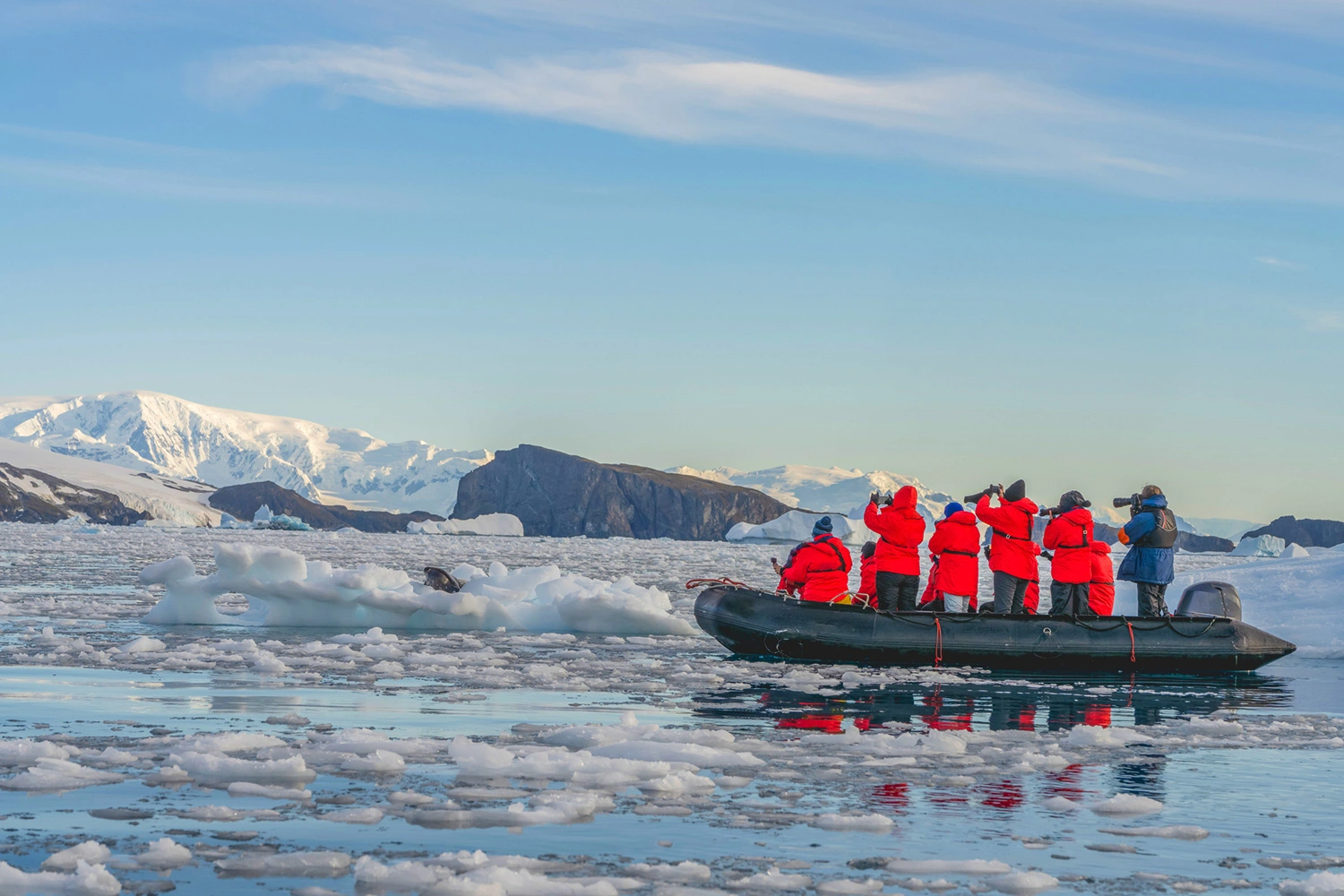
Antarctic tourists watch a leopard seal very closely from the Zodiac

Expedition Cruises

FAQs

A regular ocean cruise visits popular port cities on a fixed schedule; the ship is the main attraction. An expedition cruise treats the ship as a vehicle for getting to places most people never see. Daily schedules are flexible and adapt to wildlife sightings and weather. Onboard experts — marine biologists, geologists, ornithologists — give lectures and lead Zodiac landings. Dress code is practical layers, not formal nights. The experience is closer to a guided wilderness expedition than a resort holiday at sea.

Expedition cruises visit destinations that are inaccessible or impractical by land or conventional ship. Top destinations include Antarctica (November–March), the Arctic and Svalbard (June–August), the Galápagos Islands (year-round), Alaska's Inside Passage and Glacier Bay (May–September), Patagonia and Cape Horn, the Amazon River, Canada's Arctic and Northwest Passage, Iceland, and Norway's fjords. Some expedition ships also sail the Pacific Islands, the Kimberley coast of Australia, and remote regions of Southeast Asia and Greenland.

An expedition cruise is small-ship travel to remote or off-the-beaten-path destinations that larger cruise ships cannot reach — places like Antarctica, the Arctic, the Galápagos Islands, Patagonia, and the Norwegian fjords. Ships carry between 50 and 500 passengers and are purpose-built for polar and wilderness conditions. The focus is wildlife, nature, and guided shore excursions led by onboard naturalists, scientists, and local experts, rather than onboard entertainment. Expedition cruises trade casino and waterpark for glaciers and penguins.

Plan Your Trip With Us